

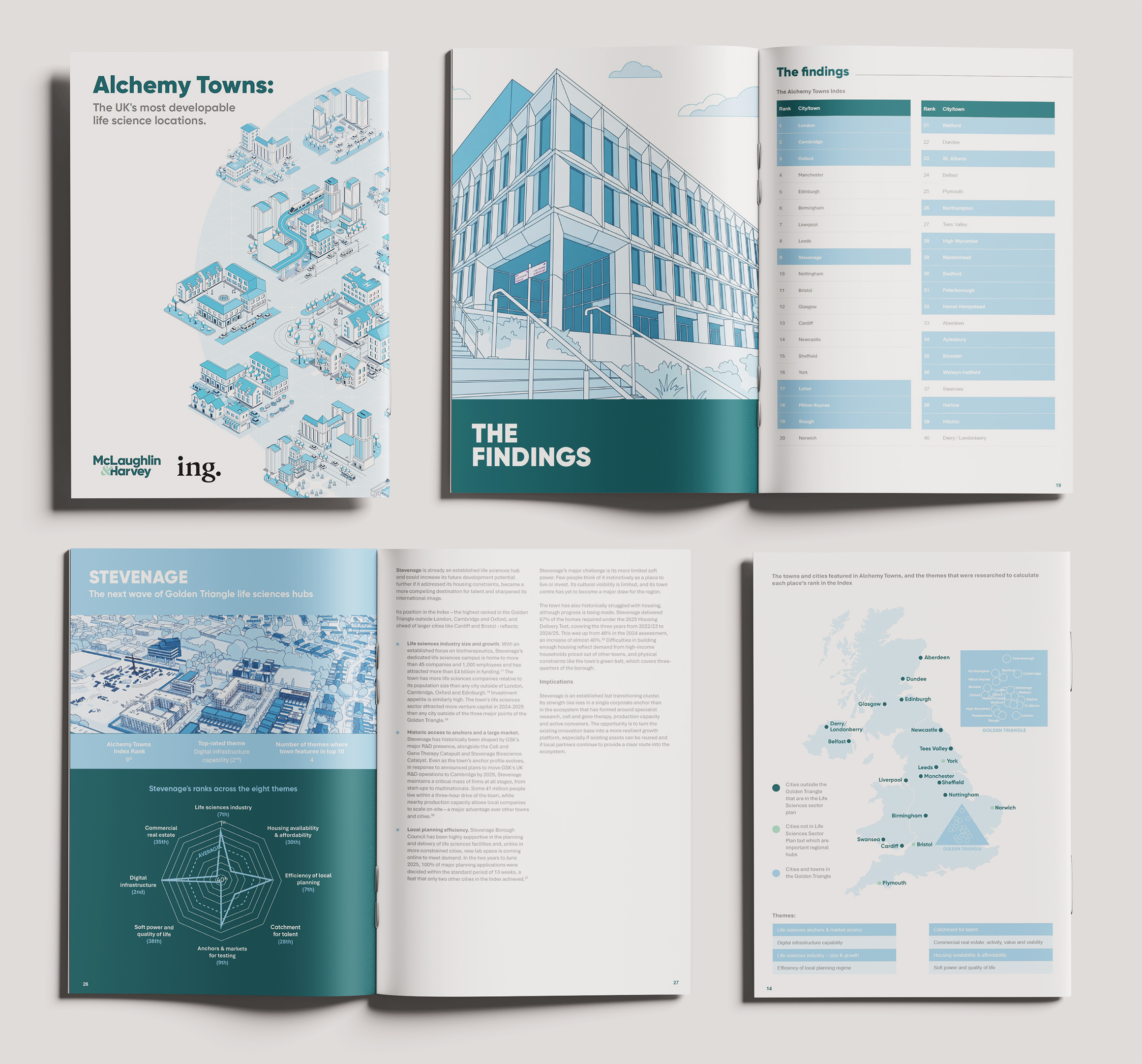
The Alchemy Towns reports looks where the future of UK life sciences development could expand beyond the best-known towns and cities as technology changes the market and factors such as access to housing, talent, infrastructure and favourable planning conditions become increasingly important.
London, Cambridge and Oxford remain the UK’s three strongest locations for life sciences development, but other areas show growing potential.
Within the life sciences ‘Golden Triangle’ in the south of England, Stevenage, Luton, Milton Keynes and Slough all rank within the top 20 places in the Alchemy Towns Index. Like London, Oxford and Cambridge, these places benefit from proximity to the UK’s largest concentration of life sciences anchors, investors, universities and hospitals.
But the data analysed for the Alchemy Towns Index indicates that these areas’ other advantages, for example, the affordability and availability of housing for life sciences staff, or these areas’ impressive digital infrastructure, suggest they have the potential to support more intensive life sciences development.
The findings come from the new Alchemy Towns Index, researched and produced by ING, and commissioned by McLaughlin & Harvey’s life sciences team, as a conversation starter.
The Index ranks 40 UK towns and cities by eight conditions that can support future life sciences development. These include housing availability and affordability, catchment for talent, digital infrastructure, and the efficiency of the local planning regime.
The Alchemy Towns Index finds that current laboratory activity and take-up offer only part of the picture. Future growth also depends on whether a place can provide access to talent, suitable housing, digital infrastructure, an effective planning system and commercially viable property.
At the same time, changing occupier requirements could widen the range of locations able to support life sciences growth. AI-led research, robotics, advanced manufacturing and dry-lab uses are increasing demand for flexible, digitally capable space alongside traditional wet laboratories.
Awards
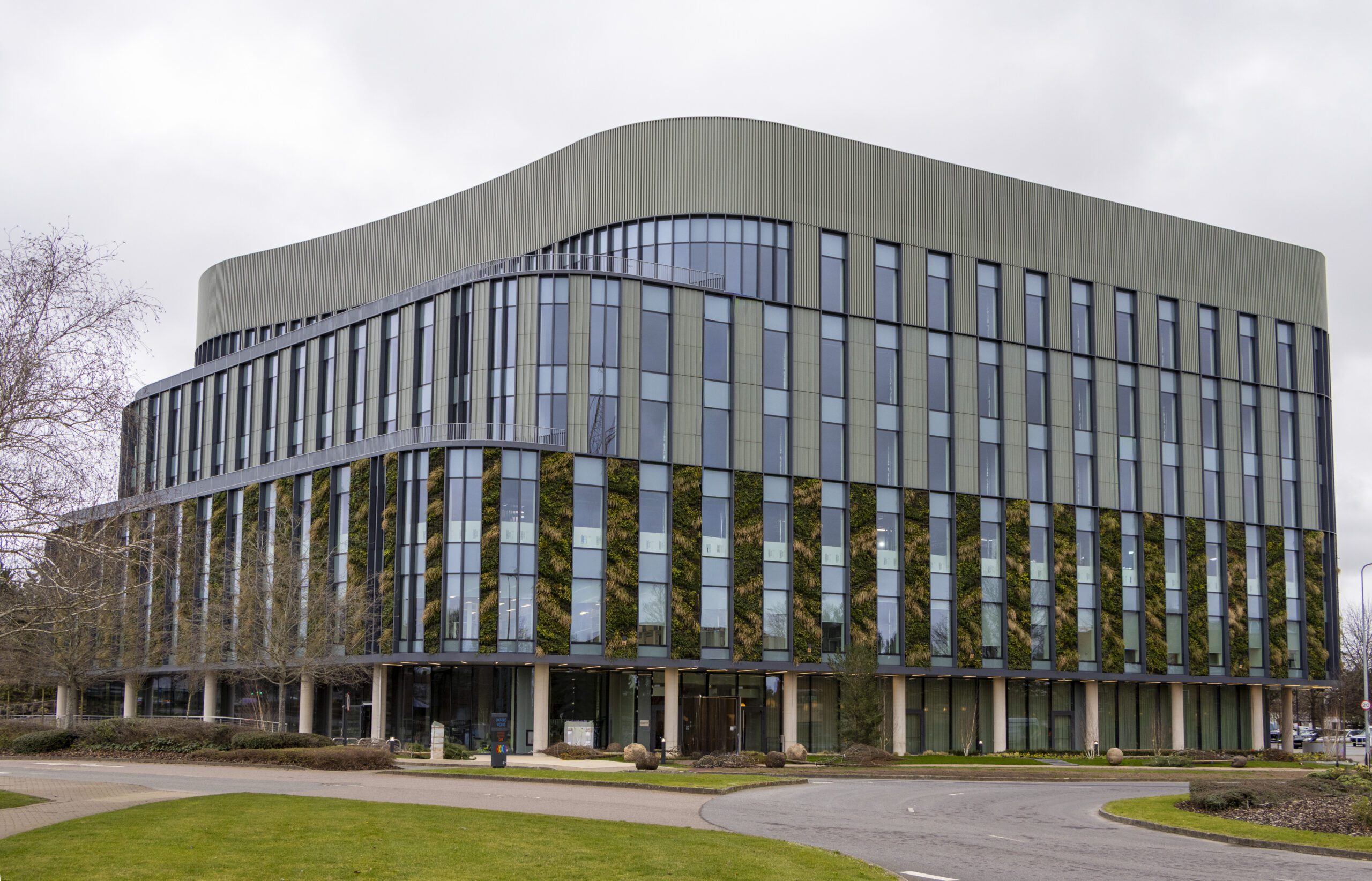
Trinity by Breakthrough joins top 1% with BREEAM Outstanding
Trinity by Breakthrough among the best of commercial buildings in the UK, after receiving a BREEAM Outstanding certification.
Awards
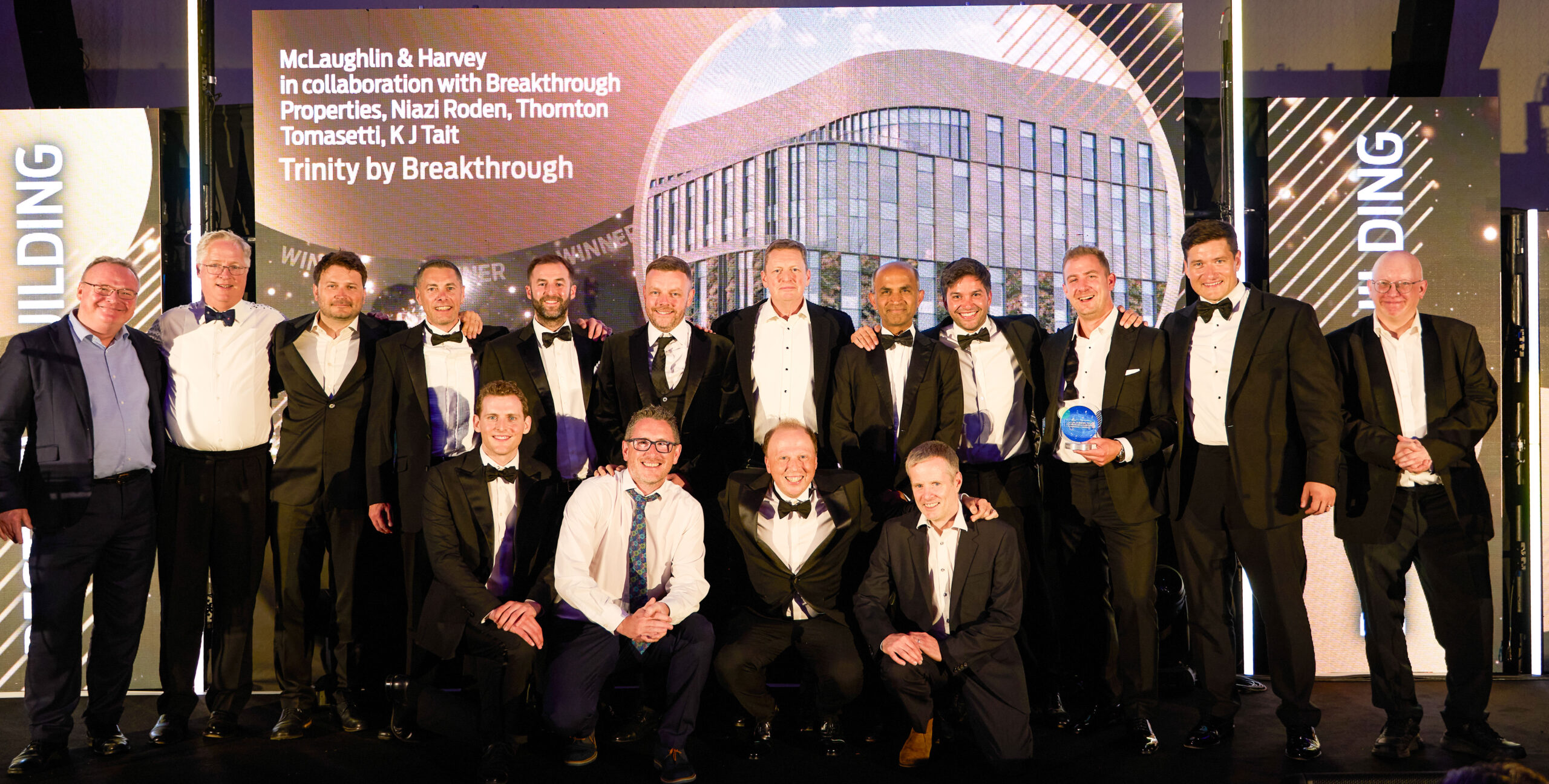
Trinity by Breakthrough wins Best New Building
Trinity by Breakthrough wins Best New Building at the Construction News & Property Week Life Sciences, Tech & Research Clusters Awards 2026.

Awards
Client collaboration recognised with Building Awards nomination
McLaughlin & Harvey’s entry for Breakthrough Properties has been shortlisted in the Construction Client of the Year category.