

Alchemy Towns
New report reveals towns and cities
with the potential to become
life sciences hubs.
The life sciences market is evolving rapidly and life sciences construction shows no signs of slowing down. At McLaughlin & Harvey, we have delivered more than 550,000 sq. ft of laboratory construction across the Golden Triangle, with more projects in the pipeline.
As life sciences activity extends into new fields and occupier requirements shift, the focus is on delivering laboratory buildings which are flexible, adaptable and designed with current and future use in mind. However, much of the attention remains on London, Cambridge and Oxford, not the places outside of these cities that have strong foundations to be future life sciences hubs.
To shine a light on the development potential beyond the Golden Triangle, McLaughlin & Harvey commissioned ING Media to research and create the Alchemy Towns Index, assessing 40 UK towns and cities to determine where conditions for growth are strong. It profiles a range of locations against a wide set of factors, including delivery conditions, demand-side indicators and long-term resilience and soft power.
The Alchemy Towns Index reveals that, whilst London, Cambridge and Oxford do have the most life sciences construction potential, four other towns emerge as front-runners to be future life sciences hubs: Stevenage, Milton Keynes, Luton and Slough.
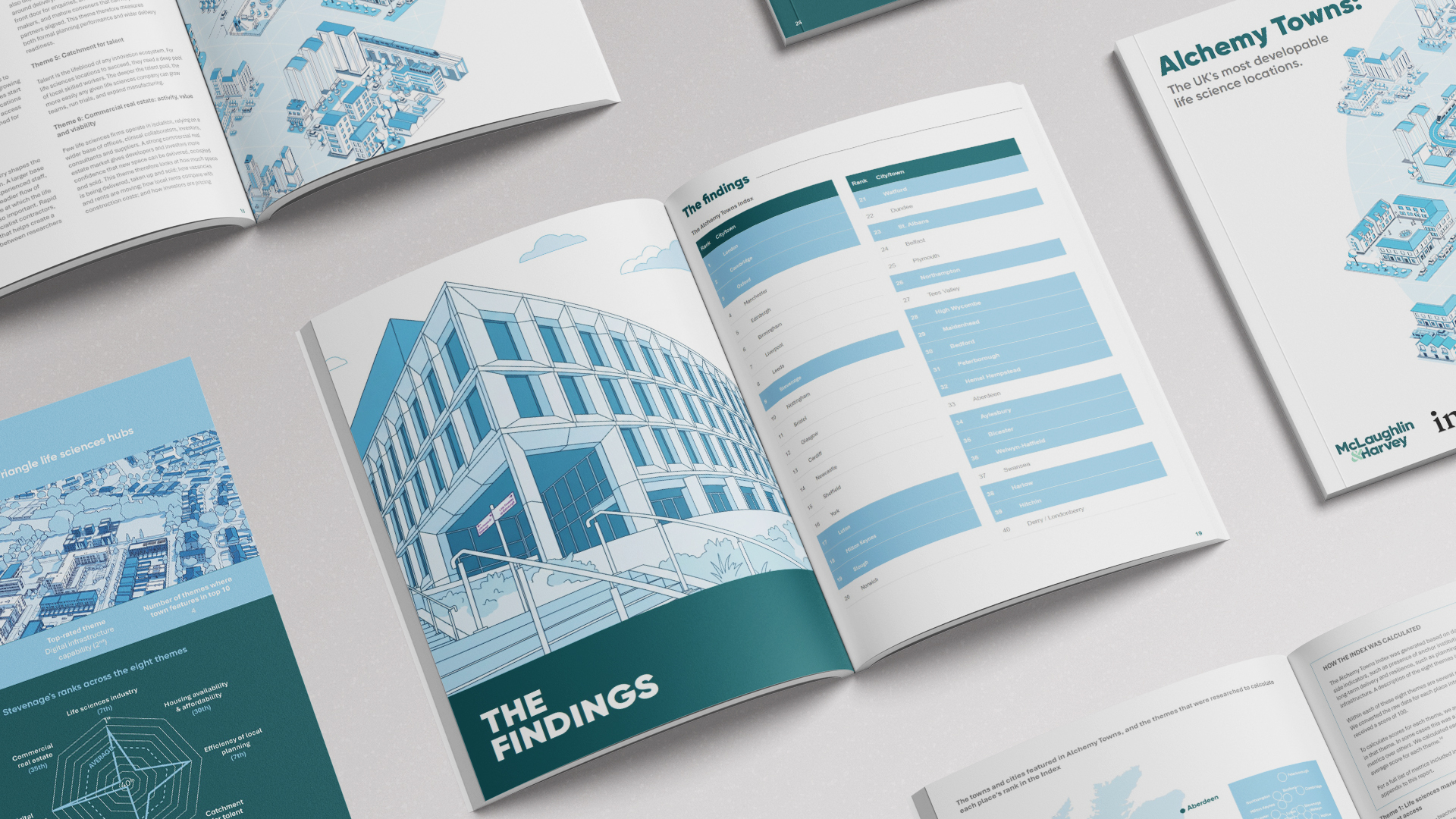
View the report
Download the Alchemy Towns Index to find out why these locations (and others across the UK) have the fundamentals to support future demand and how this potential can be turned into projects.
View hereWe’ve commissioned the Alchemy Towns Index to support developers, investors, local authorities, universities and NHS partners in initiating conversations with towns and cities that have the potential to be life sciences hubs and aid understanding of what needs to happen next to support future growth.
The Alchemy Towns Index was calculated based on data relating to eight themes. These include demand-side indicators, such as the presence of anchor institutions and market access, along with factors that affect long-term delivery and resilience, such as planning efficiency, housing availability and affordability and digital infrastructure.
London, Cambridge and Oxford all rank in the top three for life sciences development due to their large pools of talent, anchor institutions and international recognition, alongside other individual factors.
The index identified four credible candidates for the next phase of life sciences development: Stevenage, Luton, Milton Keynes and Slough. All of these places are deemed to have the conditions for future growth, combining affordability, planning efficiency, digital capability and ecosystem momentum.
Developers can use the index to prioritise towns where there is both demand-side potential and a supportive delivery context for life sciences construction. It can be used to shape delivery models around likely occupiers and growth curves, open early conversations with contractors, engage local partners, test appetite for phased or joint venture delivery, build evidence of viability and design for adaptable demand.
Our Life Sciences Experience
We are a life science construction expert who deliver world-class office and lab spaces to support the research, development and commercialisation of health innovation across the UK.
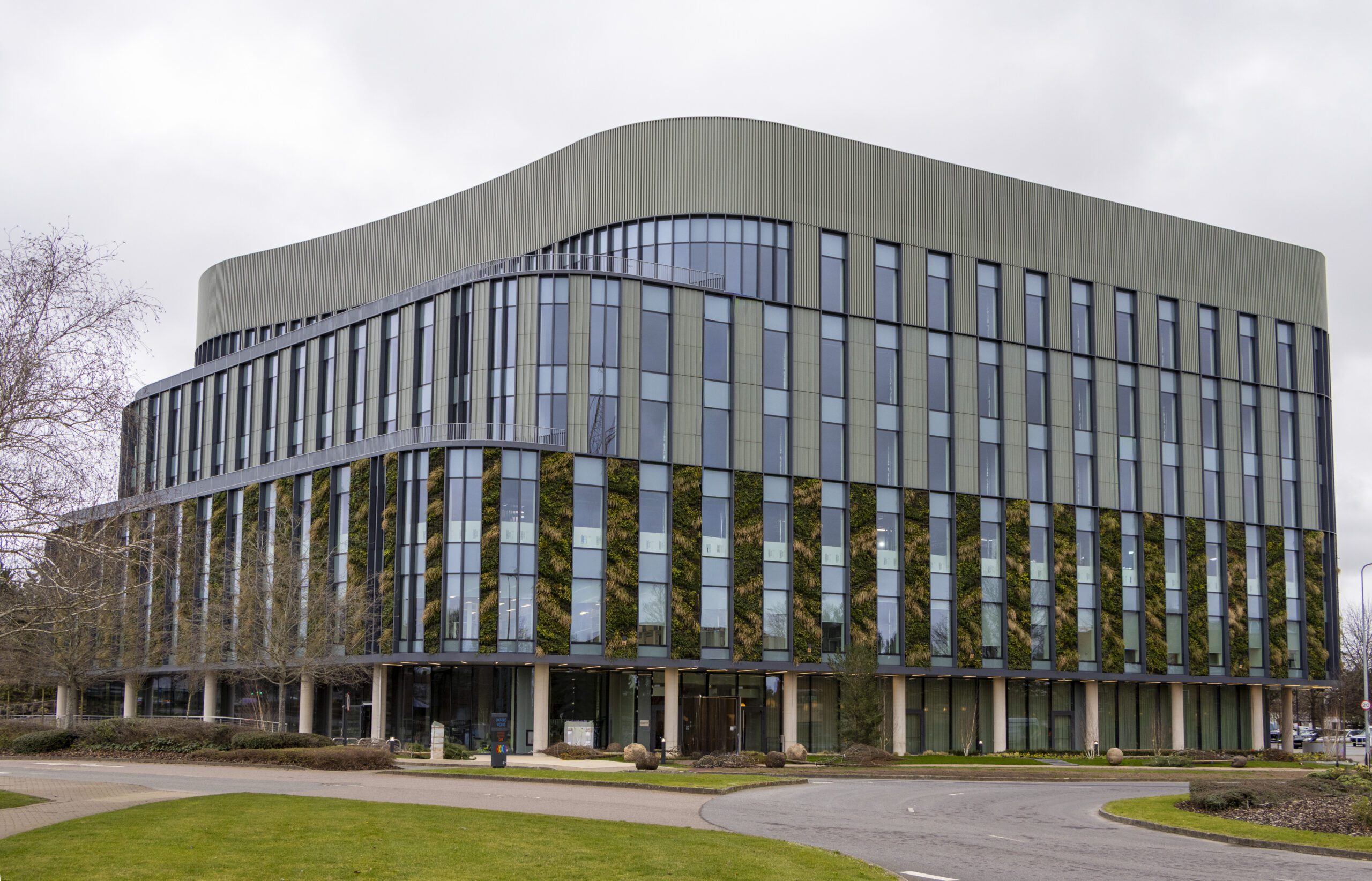
Life Sciences CapabilityTrinity by Breakthrough is a new addition to Oxford’s research community. It was designed to be one of the most sustainable laboratory environments in the world.
Trinity by BreakthroughMcLaughlin & Harvey took home the award for Best New Building at the Construction News & Property Week Life Sciences, Tech & Research Clusters Awards 2026 at a recent London event.
CN Awards Win